






Growing Conditions & Care:
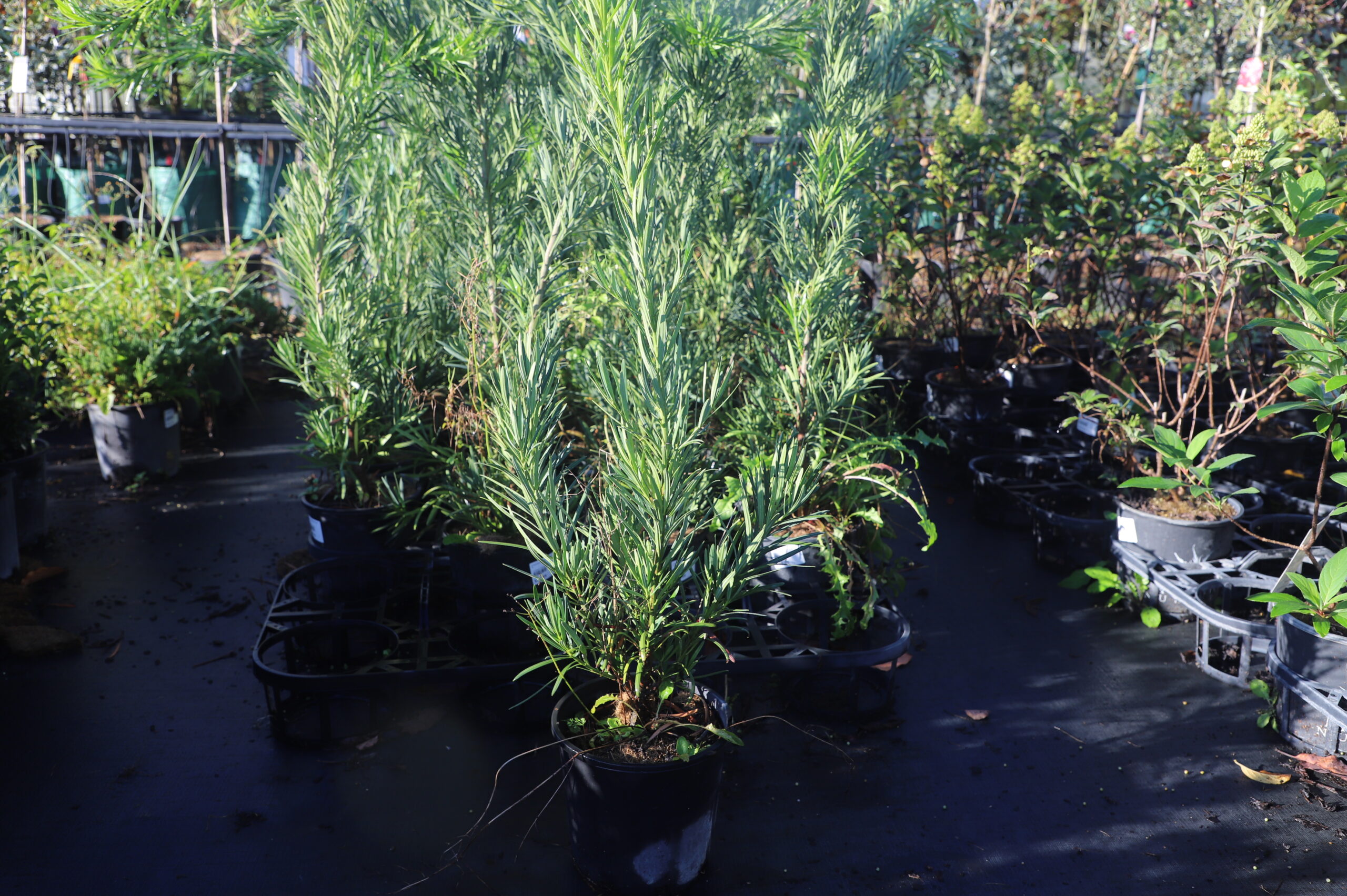
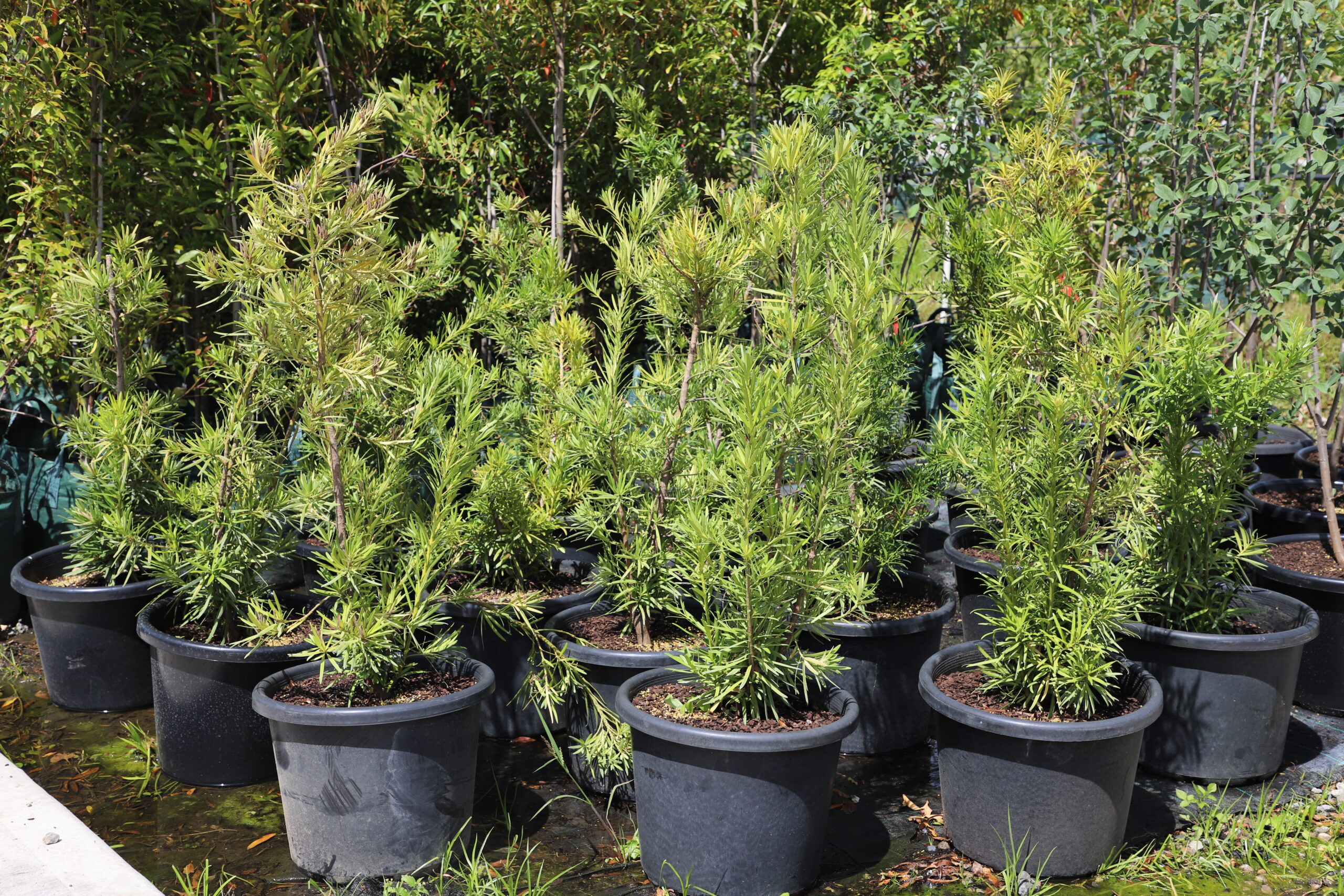
- Appearance: A small to medium-sized tree, typically 15–20m (up to 40m in some cases), often maintained as a smaller shrub. It has narrow, leathery, strap-shaped leaves.
- Fruit: Produces small, berry-like, reddish-purple cones that are edible, though the seeds are poisonous.
- Landscaping: Popular for hedges, privacy screens, and Japanese-style gardens (cloud pruning/niwaki) due to its response to shearing.
- Hardiness: Generally suited to USDA Zones 7-11, thriving in warm, humid environments.
- Indoor/Outdoor: Often grown in containers and used as an indoor houseplant, particularly as a bonsai.
- Popular Cultivars: ‘Maki’ (dense, compact, 8-10 ft), ‘Pringles’ (short dwarf variety), and ‘Roman Candle’ (variegated new growth).
Uses In The Garden:
- Privacy Screens and Hedges: Its dense, upright habit makes it ideal for creating tall, narrow privacy screens, living walls, or formal hedges that can be maintained at various heights.
- Specimen Tree: If left unpruned, it grows into a beautiful small to medium-sized tree, suitable for acting as a focal point in the landscape.
- Topiary and Cloud Pruning: Because it responds well to heavy shearing, P. macrophyllus is frequently used for topiary, formal columns, and “cloud pruning” (Niwaki), a Japanese technique that shapes the tree into cloud-like mounds.
- Foundation and Entryway Planting: Its structured, narrow form makes it effective for flanking entries, walkways, or in foundation plantings.
- Container Gardening: It can be grown in pots for patios, terraces, or indoors in bright, indirect light, serving as an attractive, year-round green focal point.
- Espalier: Its flexible branches allow it to be trained against walls or fences (espaliered).
- Bonsai: Small varieties like P. macrophyllus ‘Maki’ are highly valued in bonsai for their slow growth and fine, needle-like foliage.